Julien Luneau
Plant Pathology at the Microscale





Welcome to my page!
I am currently a postdoc at the University of Lausanne (Switzerland) where I use interdisciplinary approaches to understand how complex spatiotemporal behaviors emerge in bacterial pathogens during host infection.
I am hosted in the labs of Pietro de Anna and Simon van Vliet.
RESEARCH VISION
Pests and pathogens often drastically reduce crop yield and threaten food availability. As we strive to control plant diseases, the development of new solutions requires a better understanding of plant-pathogen interactions, especially to improve the sustainability of agrosystems and their resilience to climate change.
I believe that taking a systems biology approach to understand pathogen ecology and evolution can help us solve the problem of plant diseases. Combining functional genomics, single-cell microscopy and computational simulations, I focus on two critical questions:
1) What makes a pathogen successful during local and systemic plant infection?
2) How do microscale spatiotemporal dynamics shape pathogen virulence behavior?
PROJECTS
In planta pathogen genomics
How do bacterial pathogens successfully establish upon entry into plant leaves?
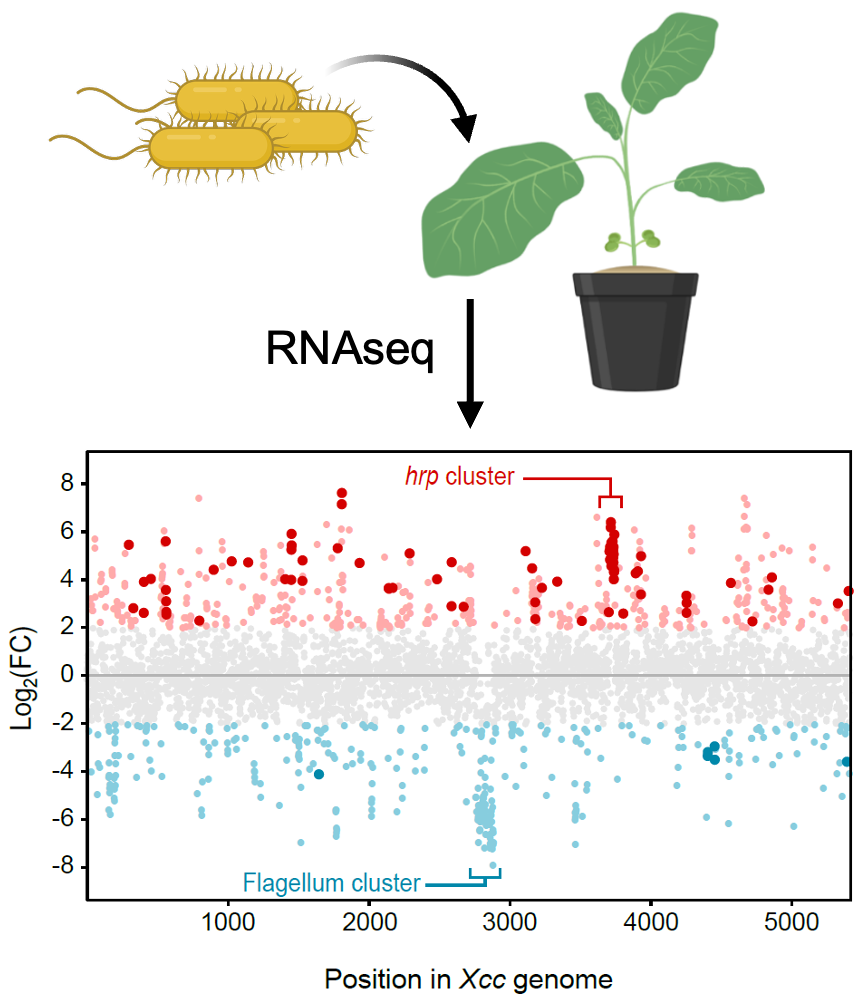
First, we reasoned that pathogens would respond specifically to the leaf environment and adjust their transcriptome accordingly. Comparing the bacterial transcriptome upon early entry and late establishment time-points, we found that during colonization bacteria drastically turn down motility, induce high-affinity nutrients uptake, adjust metabolic activities towards catabolism of plant compounds and partially activate the production of virulence factors. This brought significant insights into the nutritional, virulence and stress status of the pathogen during early biotrophic and non-vascular infection stages.
Read more: Luneau, Cerutti et al. (2022) Molecular Plant Pathology
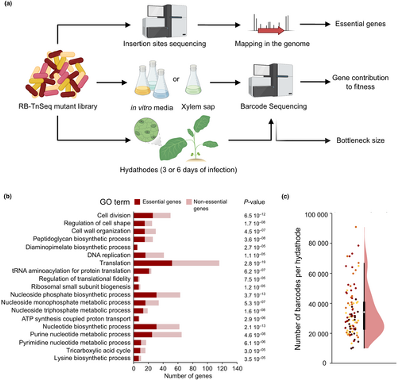
Then, we performed a genome-wide screening for genes directly contributing to pathogen growth in plant environments using an RB-TnSeq library of bacterial mutants. In addition to identifying over 350 essential genes, we confirmed the importance of metabolic capacities, but surprisingly few virulence factors for growth in hydathodes and xylem sap. Interestingly, we noticed social behaviors occurring within our population of mutants, with bacteria lacking major virulence regulators displaying a competitive advantage and behaving as cheaters. This observation of social behaviors during plant infection fueled my interest for pathogen in-host ecology and evolution, which is now central to my projects.
Read more: Luneau et al. (2022) New Phytologist
Single-cell pathogen ecology (ongoing)
How do individuals within a clonal pathogen population cooperate for virulence?
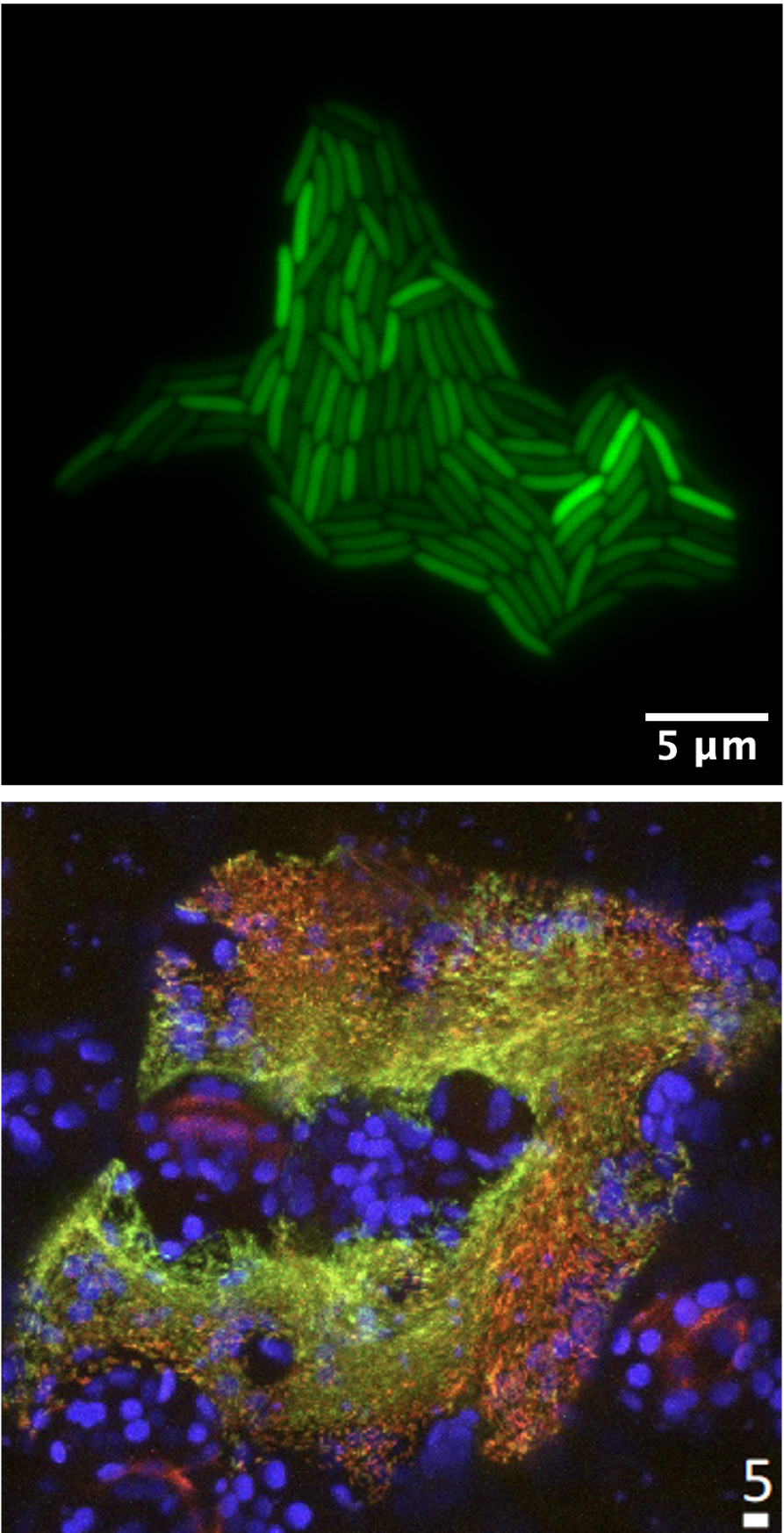
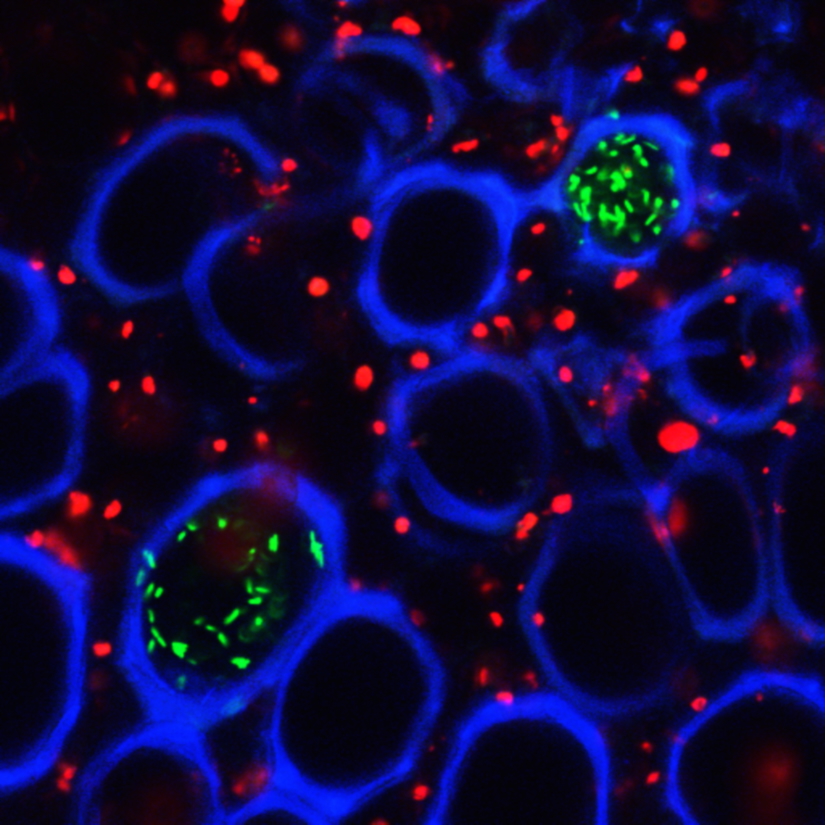
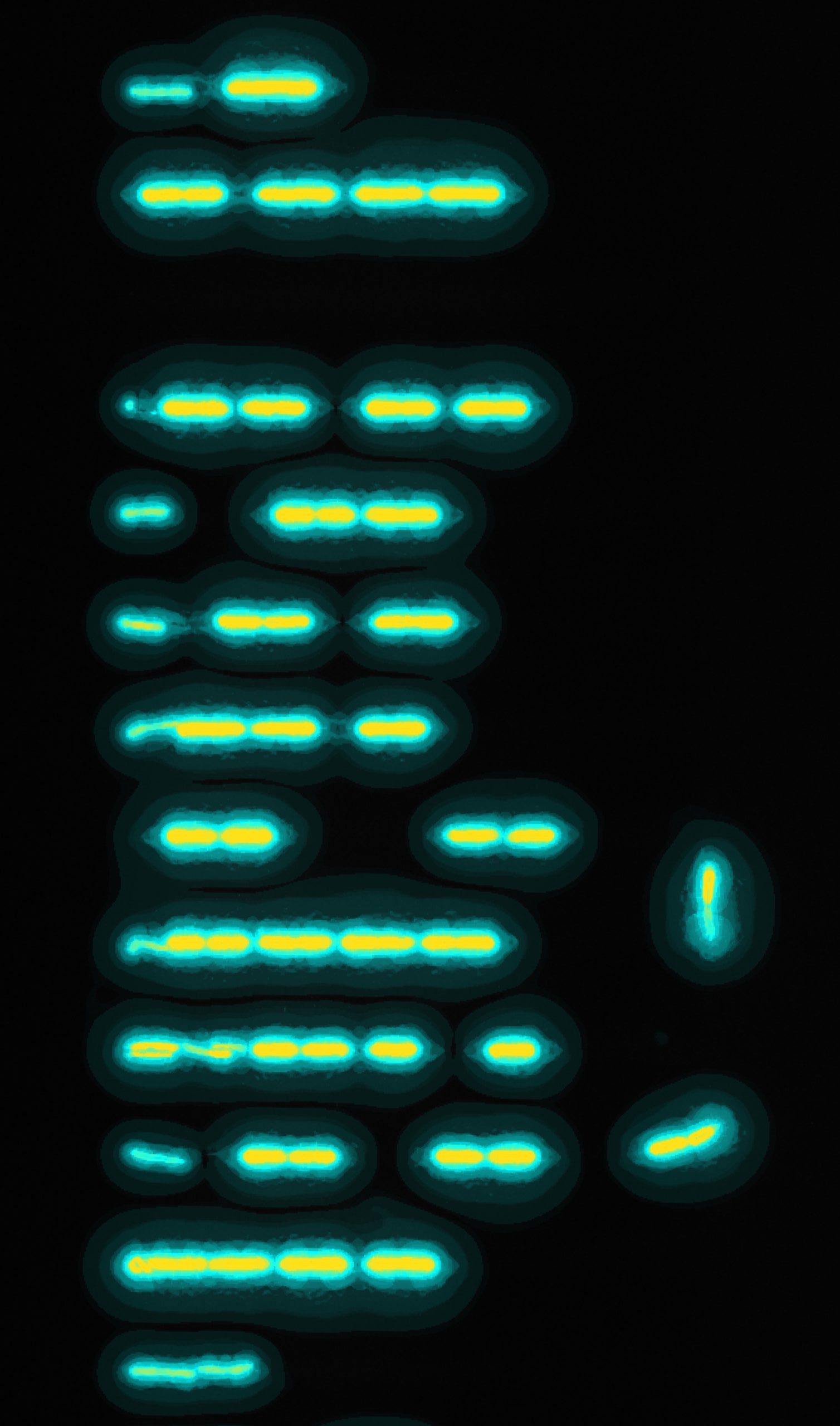
While we know clonal populations of bacteria often exhibit heterogeneous phenotypes, the importance of heterogeneity for plant infection is largely unexplored. In a collaboration spearheaded by Carmen Beuzón’s lab (University of Málaga), we described the interplay and spatiotemporal dynamics of the type III secretion system and flagella expression in the leaf tissue. We observed the emergence of spatially clustered phenotypes in the mesophyll where the pathogen population divides labor between immunosuppressive cells and motile cells, thus improving infection and dissemination functions. We also performed single-cell growth measurements of cells expressing the flagella and found it to be costly for the cells.
How does phenotypic heterogeneity emerge from local pathogen-environment interactions ?
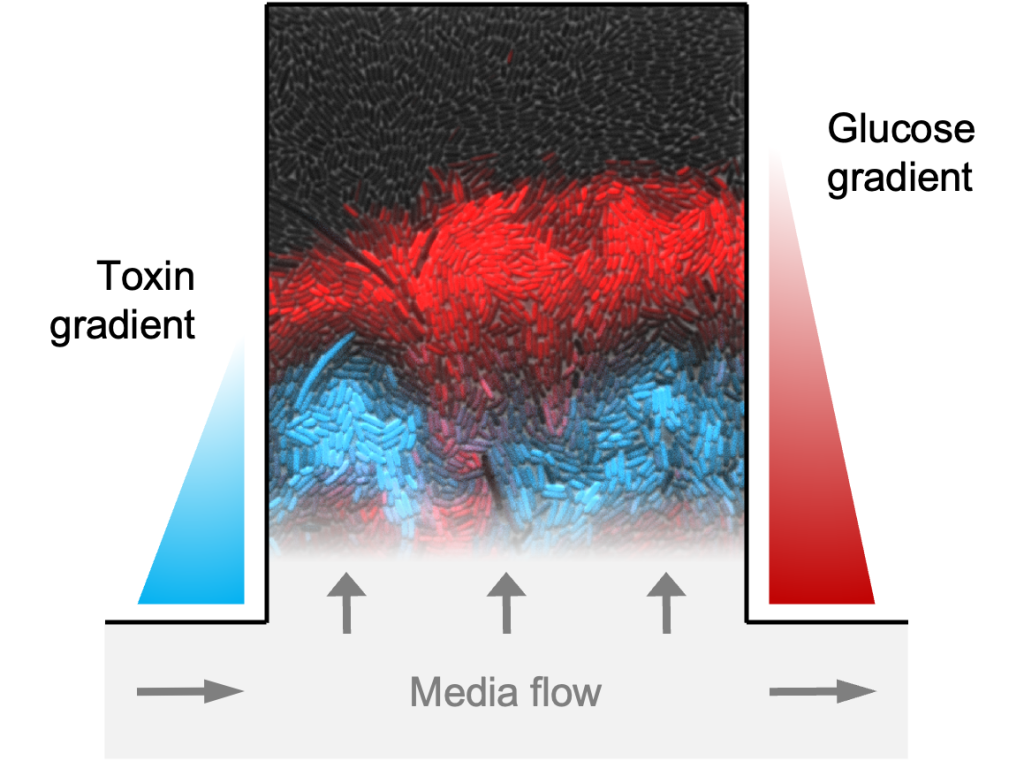
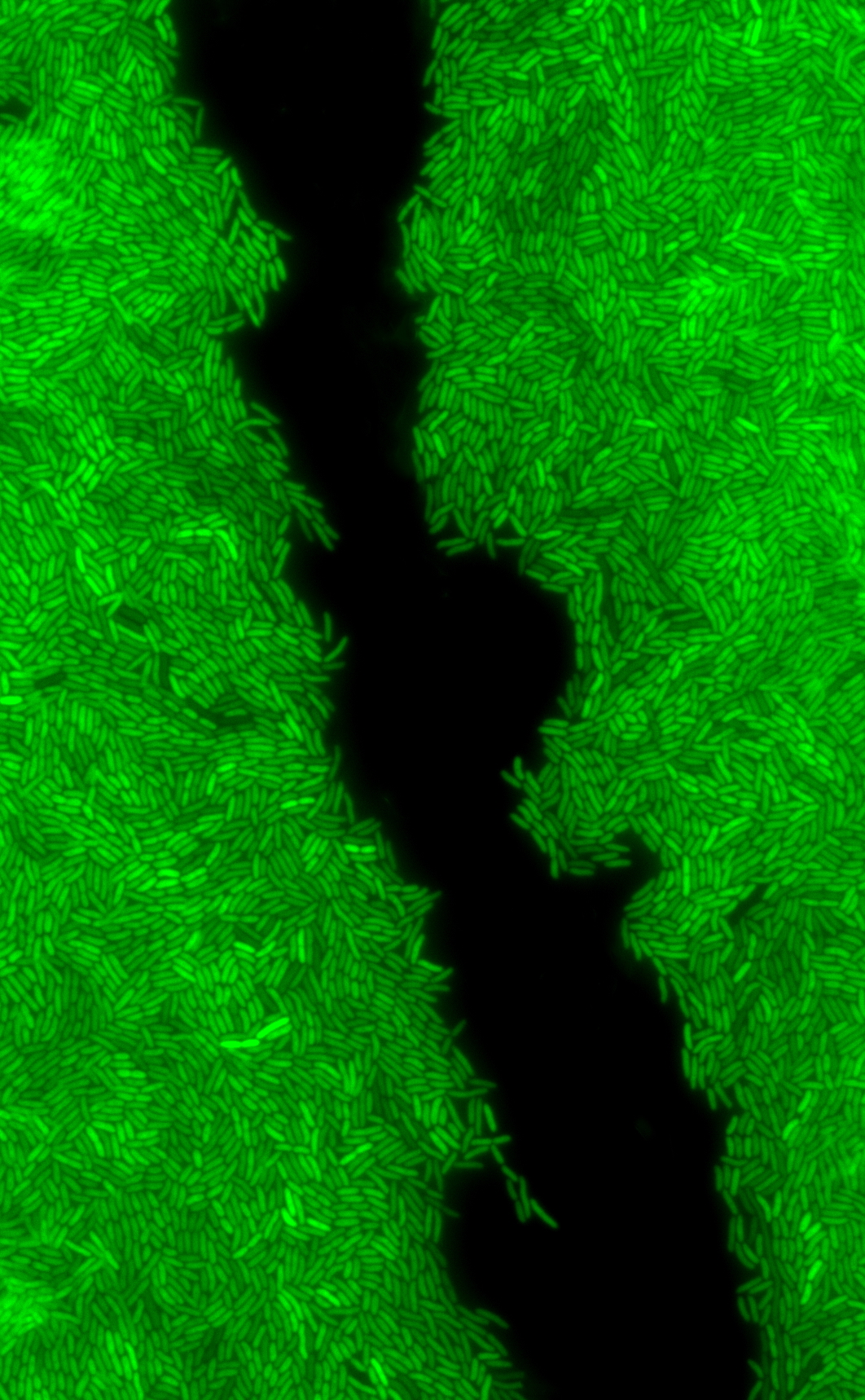
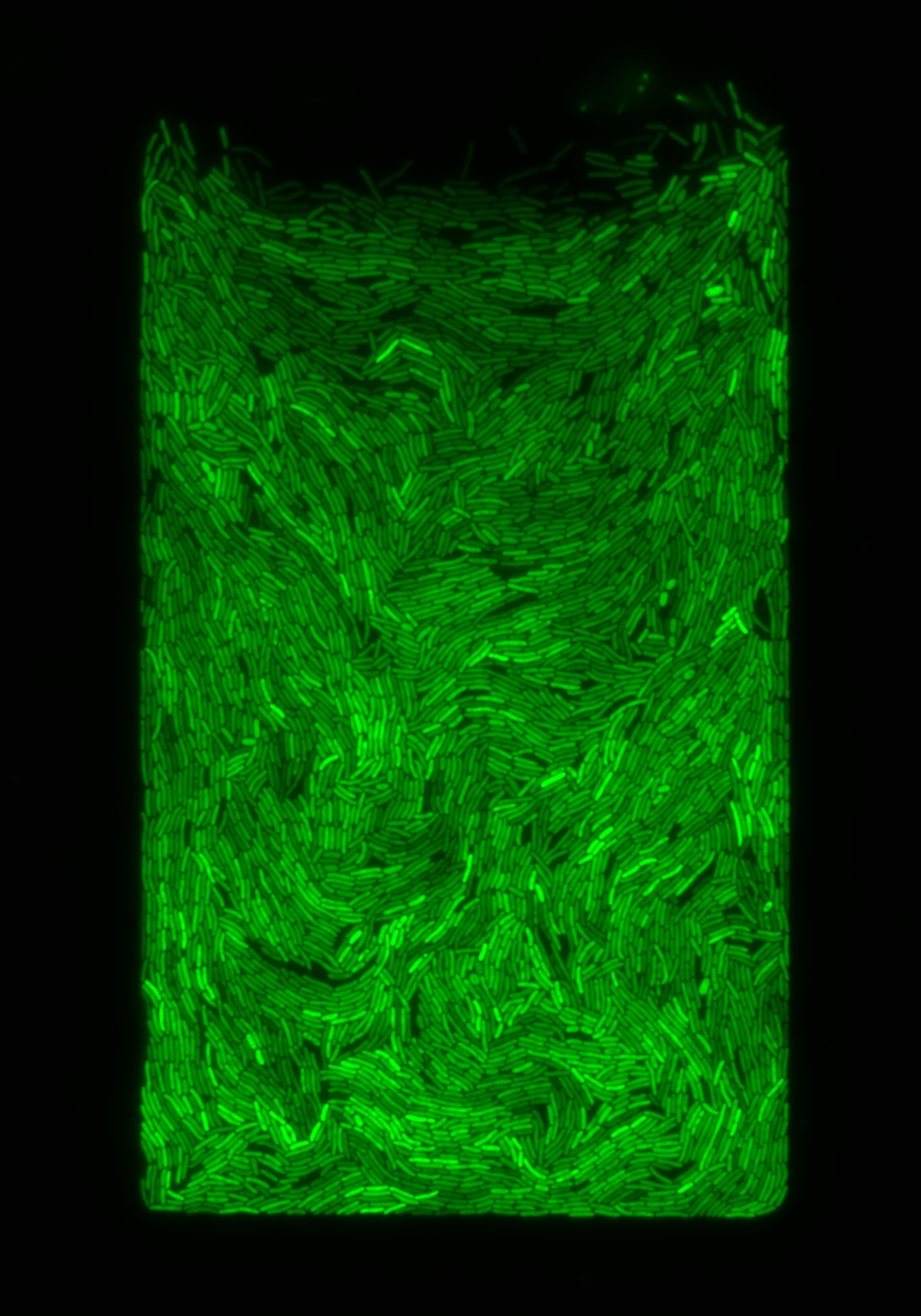
Here, we study the effect of environmental variation as a source of phenotypic heterogeneity. We grow bacteria in microfluidic chambers and explore how gradients self-generated by bacterial activity and likely to occur in the host (nutrients, toxins) can affect single-cell heterogeneity in the expression of virulence factors. Understanding the effect of micro-scale gradients on the behavior of bacterial populations will expose an additional layer of complexity that pathogens harness for successful plant infection.
Modeling pathogen-immunity-microbiota interactions (ongoing)
How can plant immunity activation by the microbiota lead to disease suppression?
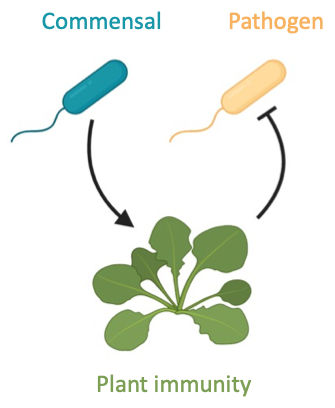
Disease-suppressive properties of the microbiota have enormous potential for field applications. Here, we explore how local activation of immunity by commensal bacteria can prevent pathogen establishment in the plant. Using individual-based modeling, we simulate leaf infection by a bacterial pathogen alongside a non-pathogenic strain and study the conditions stopping or allowing plant colonization by the pathogen. In addition, we explore how immunosuppression by the pathogen can benefit commensal strains and lead to the co-existence sometimes observed in the field. Ultimately, we aim to find general principles in host-pathogen-microbiota interactions to guide the design of synthetic communities for disease control.
Biophysical pathogen-environment feedbacks during vascular infection (ongoing)
How do vascular pathogens navigate the xylem environment?
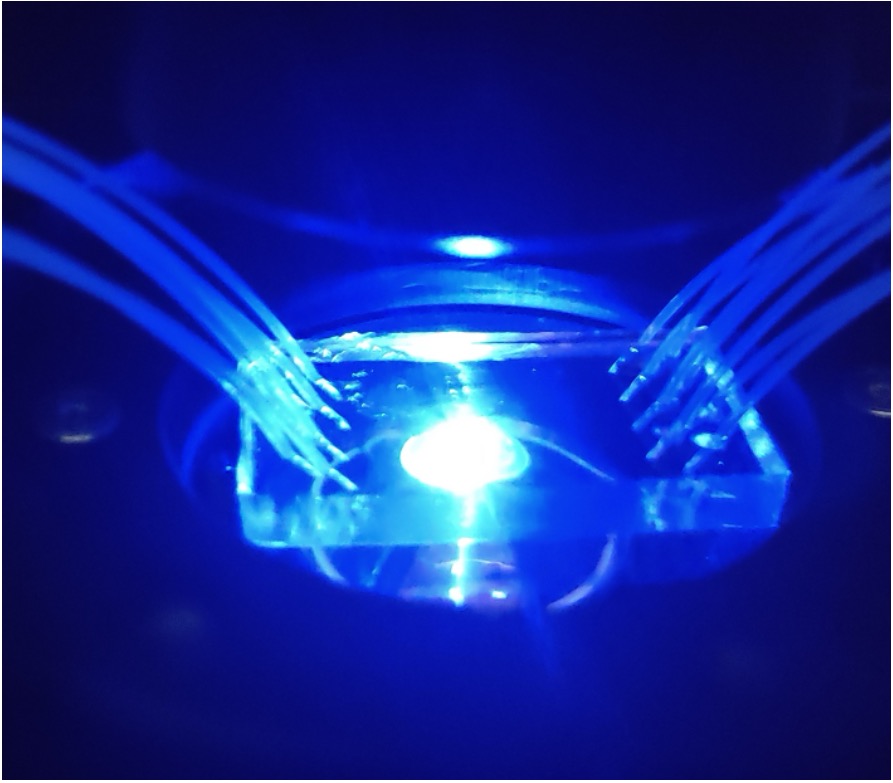
The plant xylem is a network of connected vessels under flow that transports water and simple nutrients. Vascular pathogens manage to successfully colonize this seemingly hostile, nutrient-poor environment to cause systemic infection. Here, we designed a microfluidic xylem chip to visualize how bacteria colonize a vascular network against the flow and disentangle biological and physical factors at play. Through time-lapse imaging, I explore how quorum sensing and the large production of exopolysaccharides help pathogens clog vessels, reshape the physical environment and improve colonization.
CURRICULUM VITAE [pdf]
| From Jan 2026 | Postdoc | University of Lausanne, Switzerland Supervisors: Pietro de Anna & Simon van Vliet Collective colonization and adaptation of xylem pathogens to a vascular network under flow |
| Feb 2023 – Oct 2025 | Postdoc | University of Lausanne, Switzerland Supervisors: Sara Mitri & Simon van Vliet Single-cell pathogen ecology & Modelling pathogen-immunity-microbiota interactions |
| Sep 2021 – Dec 2022 | Postdoc | University of Lausanne, Switzerland Supervisor: Alma Dal Co Single-cell pathogen ecology under fluctuating environmental conditions |
| Sep 2017 – Feb 2021 | PhD Thesis | University of Toulouse / INRAE / CNRS, Laboratory of Plant-Microbes-Environnement Interactions Supervisors: Alice Boulanger & Emmanuelle Lauber Genome-wide identification of fitness determinants in Xanthomonas campestris during early plant infection |
| Jan – June 2017 | MSc Thesis | INRAE Research Institute for Horticulture and Seeds, Angers, France Supervisors: Alexandre Degrave & Romain Warneys Mechanisms activated in apple by a Plant Defense Elicitor protecting against Erwinia amylovora |
| July – Aug 2016 | MSc Student Internship | INRAE Fruit Biology & Pathology, Bordeaux, France Supervisor: Sylvie German Retana Interactions between plant and Potyvirus proteins for cell-to-cell movement |
| Sep 2015 – Jan 2016 | MSc Student Intership | University of California, Riverside, USA Supervisor: Caroline Roper & Brian Engel Role of the Type II Secretion System in the virulence of Xylella fastidiosa on grapevine |
IMAGE GALLERY
© Julien Luneau
If you would like to use one of these images, feel free to contact me!